
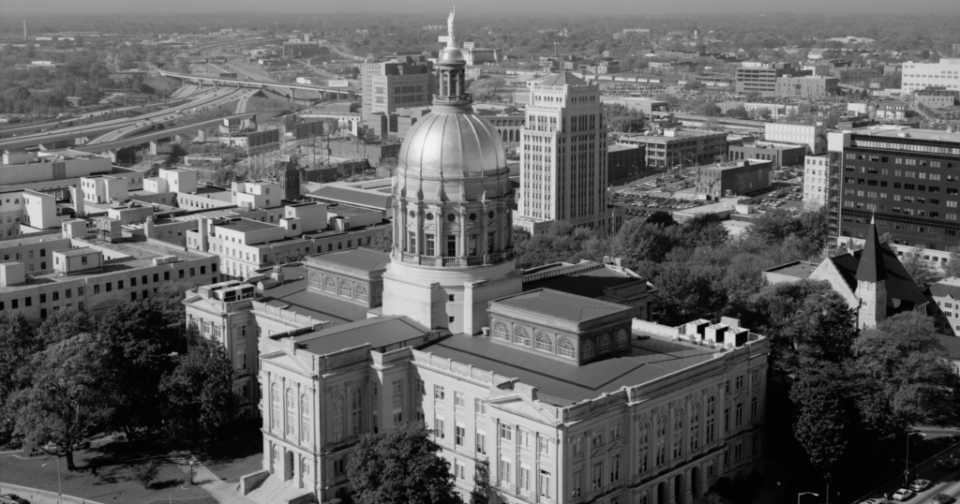
Carl Sanders campaigned heavily on widespread government reform in an era marked with local corruption and public inefficiency. When he won his election to be the state’s Governor in 1962, he organized quickly to begin implementing widespread reforms, even going as far as working with the legislature on a new constitution. On March 13th, 1964, Sanders signed an Executive Proclamation ordering a special session of the Georgia Assembly to consider many of his reforms, including “laws, resolutions and constitutional provisions governing elections, primaries, referendums, [and] political parties.”1 In that special session, the legislature adopted the Georgia Election Code which introduced the first ballot access laws.
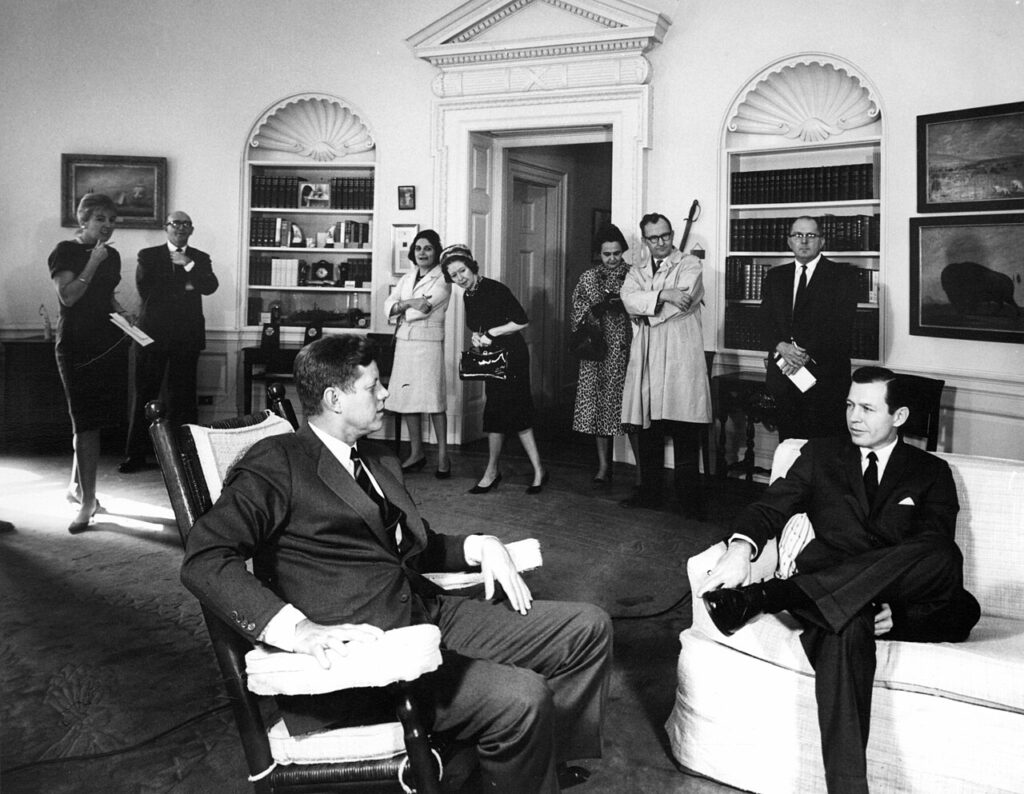
The election reform allowed any candidate that was nominated by primary (which was restricted to any political party that achieved at-least 20% of the past general election vote) to bypass the petitioning requirement. In the gubernatorial election following the reform law, the Georgia Republican Party held no primary because they did not run a candidate in the previous general election. Carl Sanders ran unopposed except for in the primary where he made his campaign promises. Republicans would have to re-establish their ballot access with a petition. Howard “Bo” Callaway took months but submitted “about 100,000 approved signatures” in the race.2
The first third-party presidential candidate that could get on the ballot in Georgia was George Wallace with the American Independent Party in the 1968 election. The campaign reported a petition of 168,000 signatures, far above the required 83,489 number that the Secretary of State gave to their campaign.3 These numbers cannot be verified. The system, though difficult, did find success in placing the former Alabama Governor known in American history for his “Segregation Now, Segregation Tomorrow, and Segregation Forever” speech on the ballot.
A Libertarian would not show up on a presidential ballot in Georgia until 1980 when Ed Clark, funded largely by his vice presidential running mate David Koch, appeared as a challenger to Ronald Reagan and Jimmy Carter. Koch’s bankrolling of ballot access for the Libertarian Party achieved nationwide access.
An independent candidate also appeared in that election with similar petitioning requirements: John Anderson. Both campaigns had to collect 57,539 signatures, but Secretary of State David Poythress rejected the Anderson petition as only containing 54,479 verified signatures. Anderson’s campaign sued the state in federal court and U.S. District Judge Newell Edenfield ordered that the independent candidate be listed on the ballot.4 Anderson remained on the ballot and would win 2.26% of the popular vote in Georgia. A third-party presidential candidate would not appear on the ballot in Georgia again until 1988 with Dr. Ron Paul and Andre Marrou’s campaign with the Libertarian Party. After that, Libertarian presidential candidates would consistently appear on Georgia ballots and will stay that way in-light of a recent law that allows any presidential candidate to appear on the ballot if they are on the ballot of 20 other states.
For the statewide races, the field was empty until two years after the Ron Paul campaign when the Libertarian Party of Georgia ran Carole Ann Rand. Georgia Libertarians also found a successful strategy during this election. The Georgia Public Service Commission is a low-level statewide election with five seats that frequently has at-least one of those seats uncontested. This was the case in the 1990 statewide offices election where Libertarians ran Elizabeth Goldin against incumbent Democrat Bob Durden. Republican voters would vote for the Libertarian because of tribal motivation to vote against the Democrat, which allowed Goldin to achieve 191,197 votes for 18.17% of the election. This surpassed the 1% requirement and the maneuver would be consistently used to maintain ballot access.
In 2022, a lawsuit against the Secretary of State alleged that the voting method used to pick members of the Public Service Commission violated the Voting Rights Act of 1965 by diluting Black votes into a statewide race despite the election being for a districted office. A Trump-appointed Judge agreed that the election method violated Black voter rights and so the election would be halted until reconfigured — but this left Georgia Libertarians without their most successful office to campaign for. Now, the election that hinged their ballot access was the 2024 presidential election which was the only statewide office on the 2024 ballot. In the history of our party, only Gary Johnson’s 2016 run managed to achieve 1% of registered voters for the presidential election. The future seemed dire, and it was. Libertarians in Georgia lost their ballot access in 2024 with only 0.4% of the vote for the Chase Oliver/Mike ter Matt campaign.
Today in Georgia, a third-party that wishes to run a slate of statewide office candidates must either achieve a number of votes equal to 1% of all registered voters or collect petition signatures of the same amount.5 Note that this isn’t a percentage of actual voters, but all eligible voters. The alternative of petitioning for ballot access is typically fought in the courts where signatures are declared ineligible for a myriad of reasons, often taking resources away from active campaigns and can result in a candidate being removed from the ballot as has been seen in recent cases in other states.6 2026 will be the first year since 1994 that Georgia Libertarians will not have any candidate on the ballot and it is unlikely any 3rd party or independent candidate will appear on any Georgia ballot (except the presidential race) unless the petitioning requirement can be met again or there is a historic turnout against the Republican and Democrat candidate in the 2028 presidential race.
- Executive Proclamation of March 13, 1964. ↩︎
- “Maddox Sees Wallace On State Ballot,” Griffin Daily News, August 31, 1967. ↩︎
- Lynn Ridlehuber, “R.A. Waldrep, Wallace elector, says he’s casting his vote for the next President,” The Forsyth County News, September 5, 1968. ↩︎
- “On-again, off-again Anderson,” The Red and Black, September 30, 1980. ↩︎
- O.C.G.A. § 21-2-170(a). ↩︎
- “Federal judge keeps Libertarian off NJ-7 ballot, while saying the state wronged her,” New Jersey Globe, August 31, 2026, https://newjerseyglobe.com/congress/federal-judge-keeps-libertarian-off-nj-7-ballot-while-saying-the-state-wronged-her/. ↩︎
